A smart fitness mirror that replaces data overload with emotional motivation, helping users stay consistent through personalized visual feedback and behavioral design.
My Role:
Co-Founder,
Product Owner,
Lead UI/UX Designer,
Hardware Designer
01
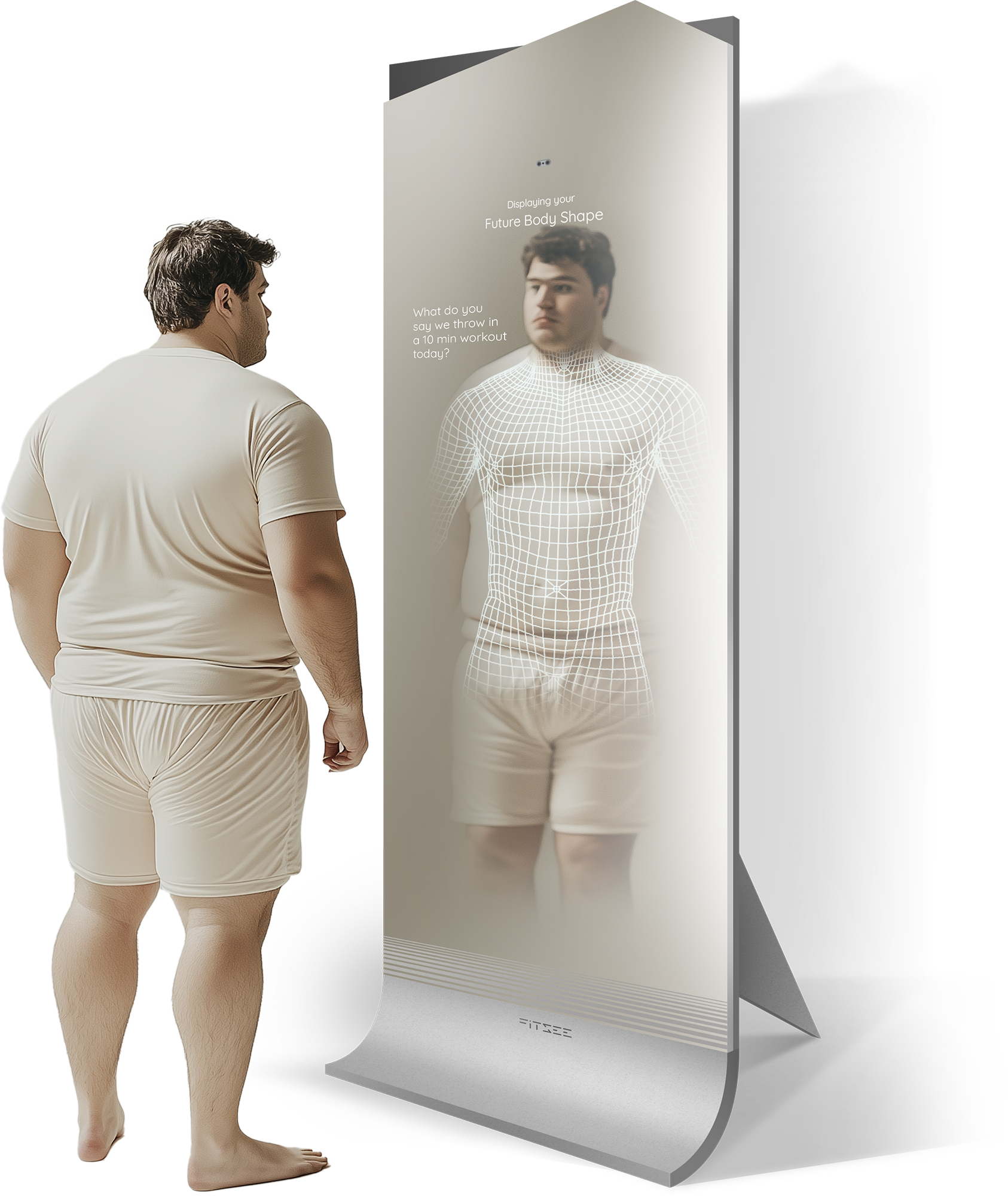
FITSEE is a smart mirror combined with an intelligent interface, designed to help users visualize their transformation journey in real-time. The project spanned from early concept through a fully functional prototype, integrating behavioral science, embedded vision technology, and empathetic design.
02
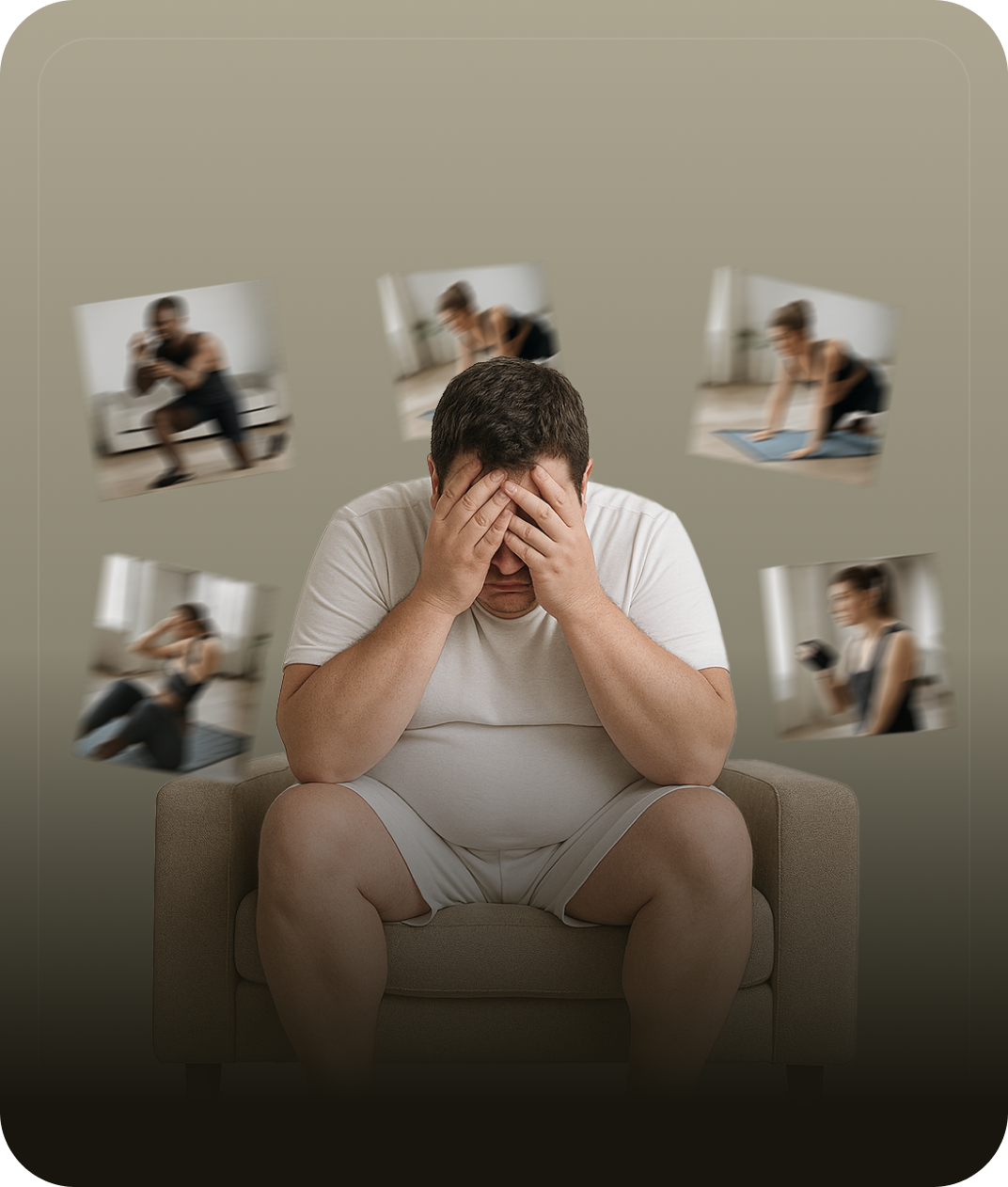
Most fitness tools focus on data: calories, reps, heart rates. But users don't quit because they lack information. They quit because they lose emotional alignment with their goals. The challenge was to build something that sustained motivation rather than just measured it.
03
Rather than adding more metrics, FITSEE was designed around behavioral nudging and personalized visual feedback. The design process covered three interconnected layers: a distinctive brand identity, a minimalist emotionally-aware UI/UX, and a custom hardware form factor - all unified by a single principle: design for belief, not just behavior.
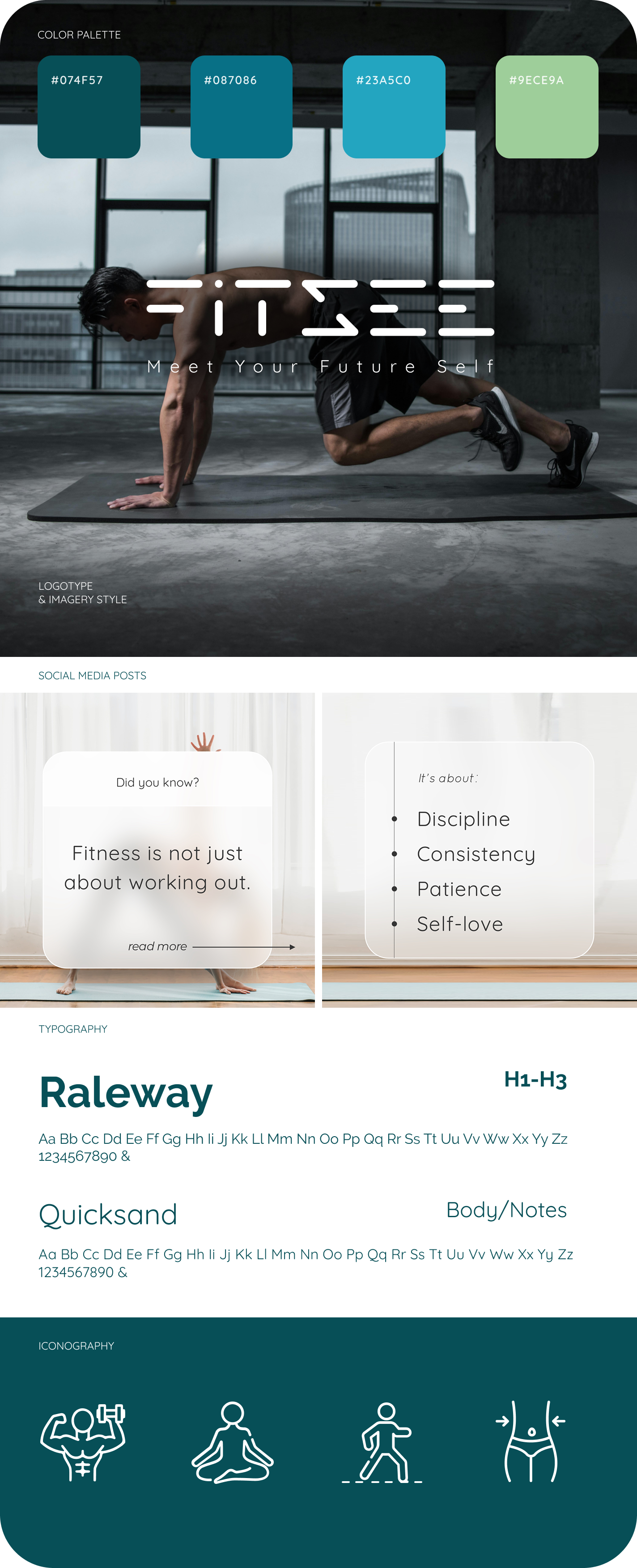
Built entirely from scratch: name, logo, color palette, and tone of voice. The visual identity was deliberately crafted to express energy, optimism, and self-compassion - actively avoiding the competitive or guilt-driven tone common in fitness brands. Typefaces Quicksand and Raleway were chosen to reinforce warmth and clarity.
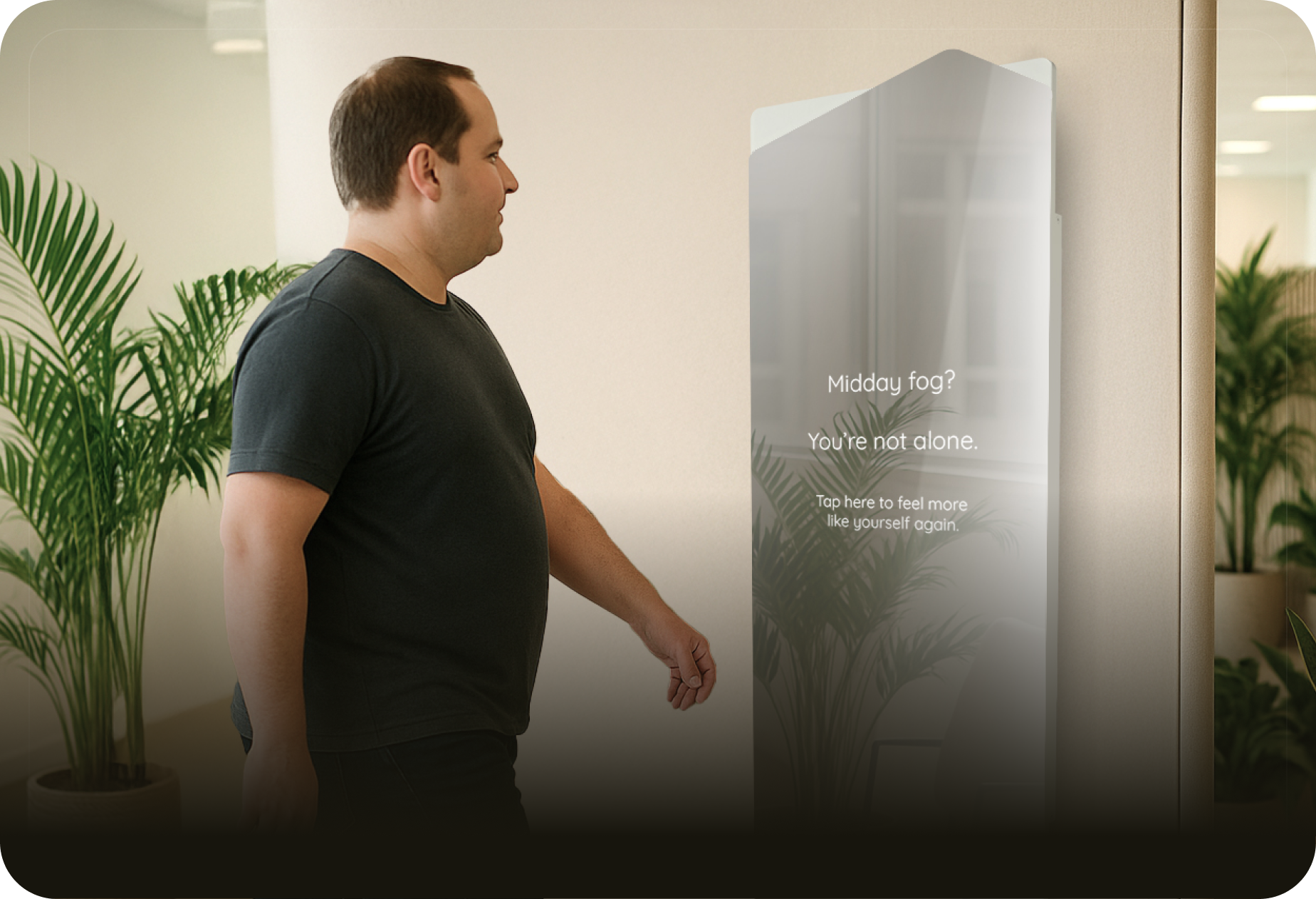
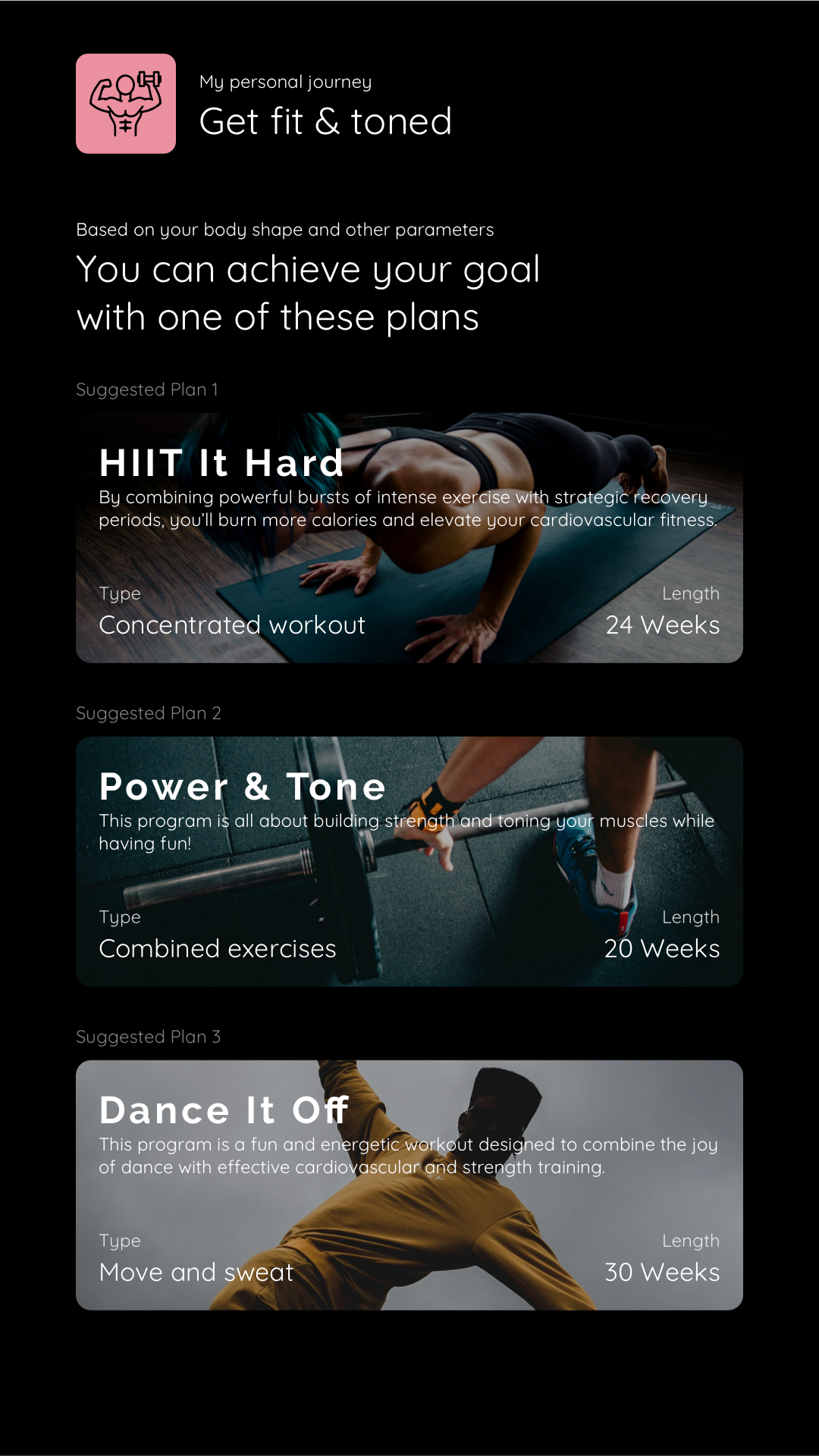
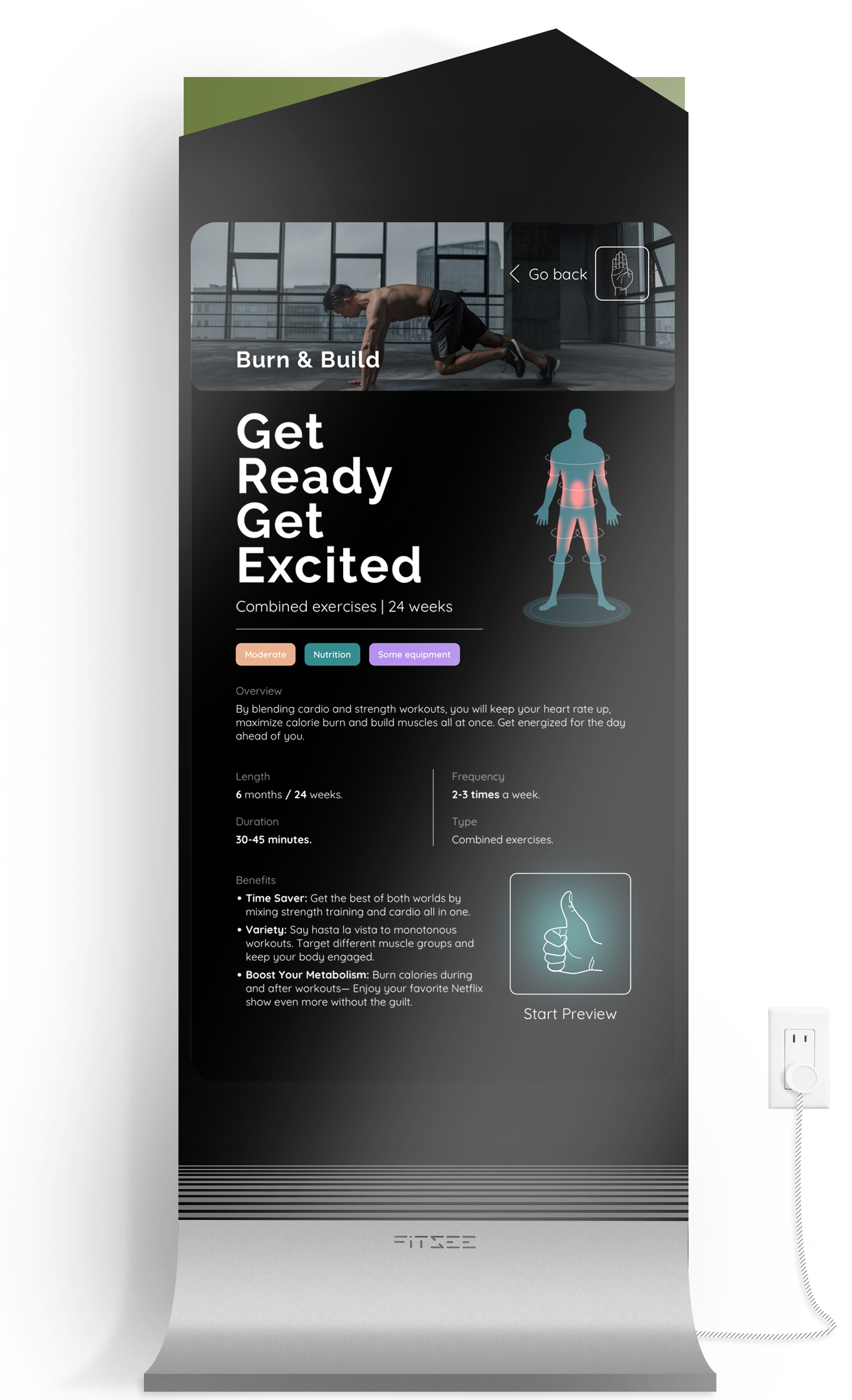
The interface was designed around minimalism, emotional resonance, and clear information hierarchy. Key principles included: a layout focused on personal goals rather than raw metrics; context-aware states that reflect the user's mood and progress; subtle animations reinforcing effort and achievement; and an adaptive flow designed to feel like a conversation, not a command sequence.
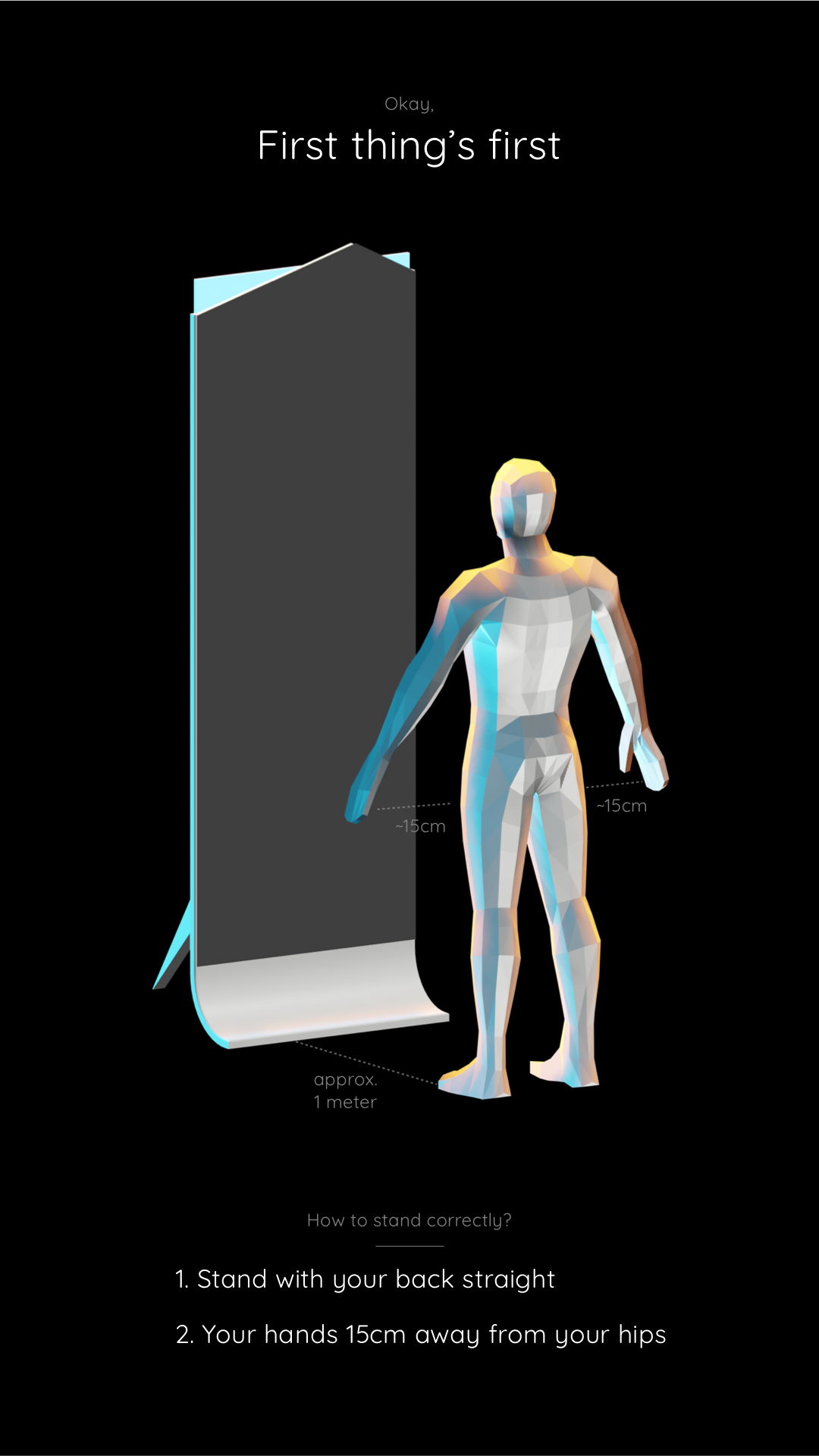
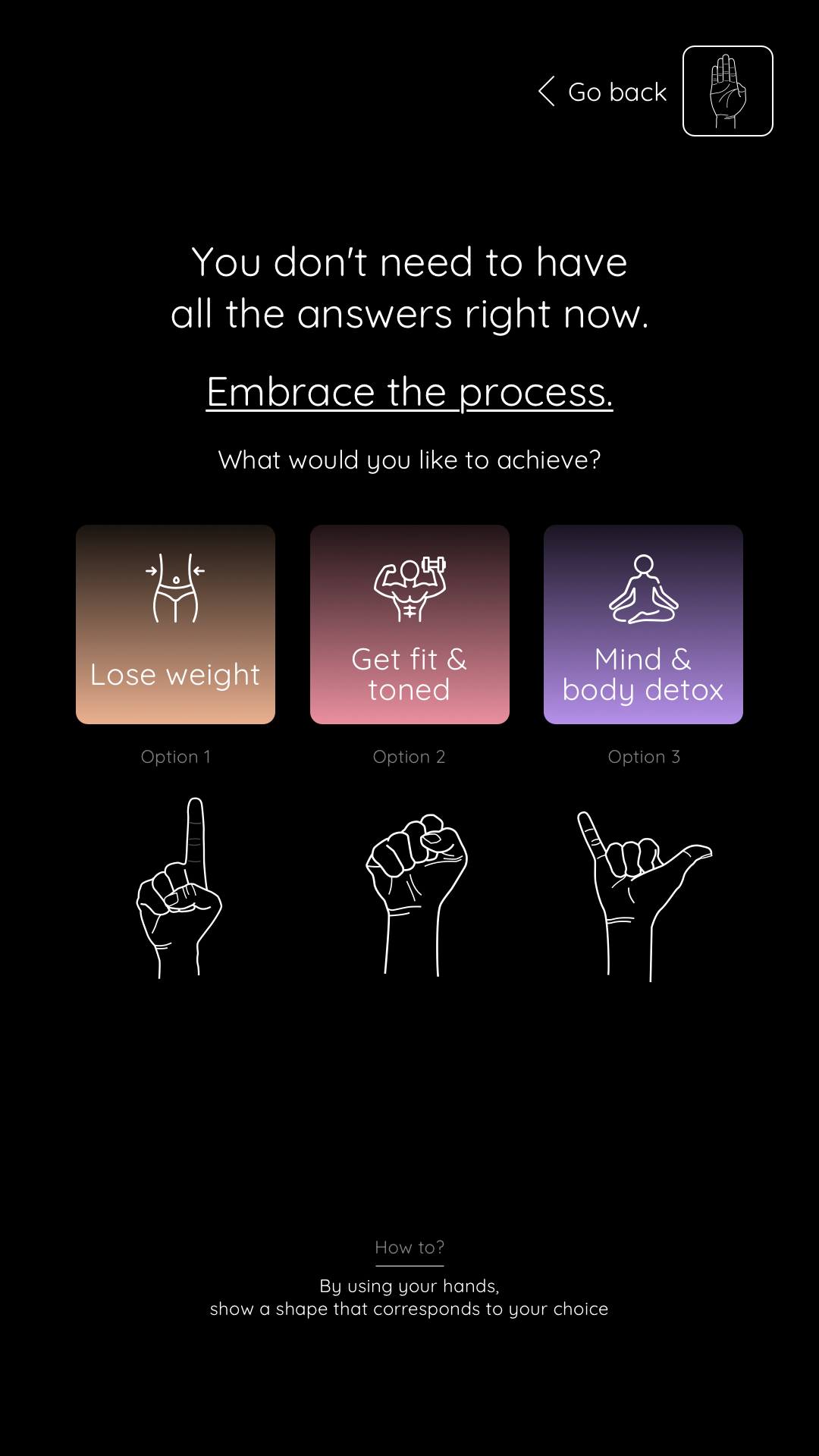
A core innovation was the introduction of a fully gesture-based control system, allowing users to navigate the entire interface using only their hands. This eliminated the need for any additional devices or the constant interruption of moving back and forth to a touchscreen mid-workout, keeping users in flow and focused on their exercise.
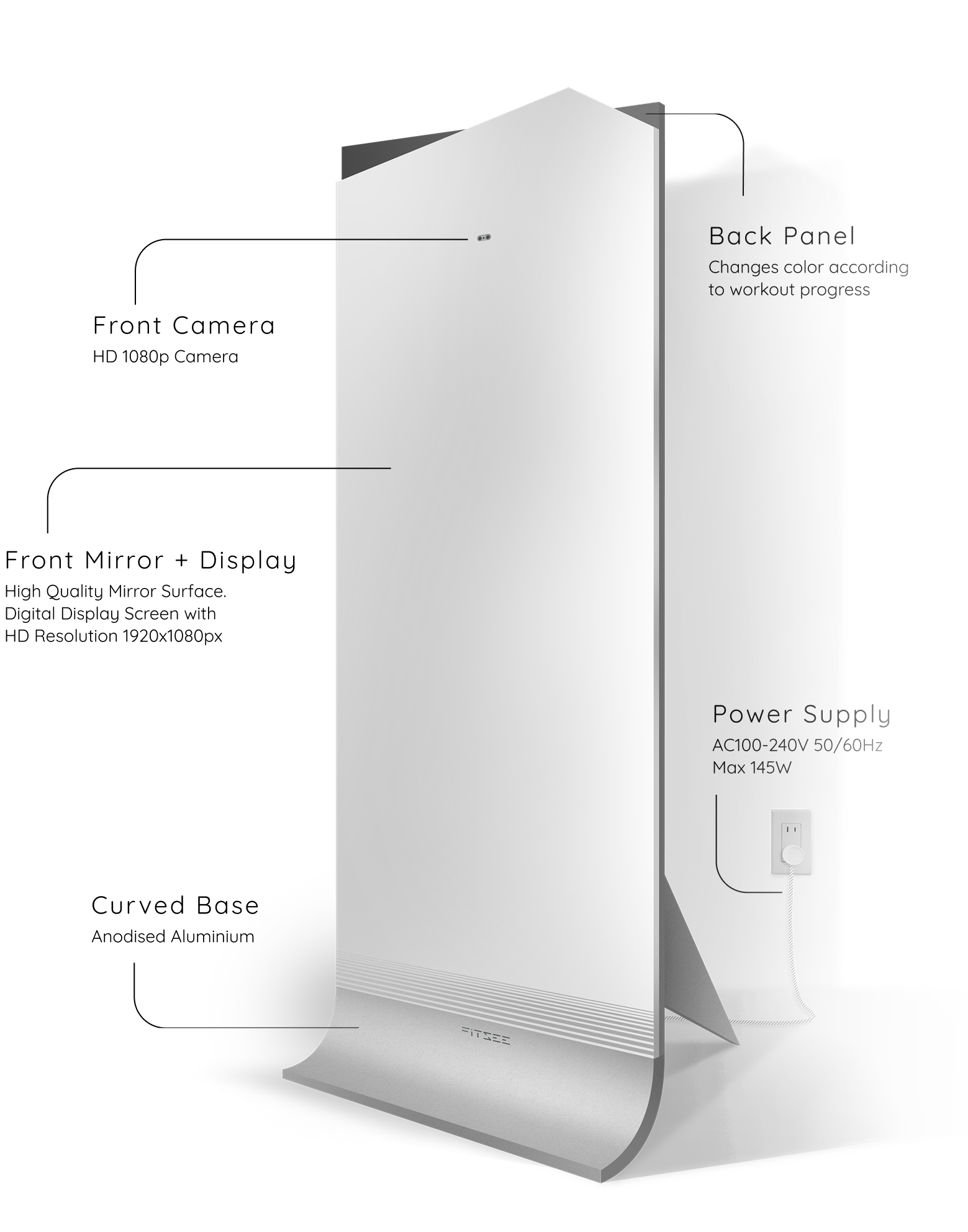
The mirror was designed as a sleek, standalone smart device, 180 centimetres tall and 60 centimetres wide, with an anodized aluminum body and an LED strip that changes color according to workout progress. The front surface combines a high-quality mirror with a 1920x1080 HD display. The interaction model is fully contactless, with no phone or accessories required, using embedded sensors and computer vision to recognize posture and gestures. The first working prototype was assembled by hand together with my father, marking the first tangible proof of concept, after which we did a full production of two presentation-ready polished versions in aluminium and white painted wood finish.
Impact
Delivered a fully functional prototype proving the feasibility of motivational visualization at scale. Developed a brand and design language strong enough to support early investor and R&D conversations. Created a behavioral design model that reframes how fitness technology engages with human psychology.
Learning
Designing for motivation requires empathy more than metrics: the real challenge is maintaining emotional continuity over time. Working across disciplines (UI/UX, hardware, and behavioral psychology) amplifies innovation but demands clear product ownership to stay coherent. Building the first prototype by hand, with my father, was a reminder that the best design work is as much about human connection as it is about technology.
Takeaway
FITSEE represents a fusion of design thinking, behavioral science, and emotional technology. Its vision was never simply to track progress, but to help people believe in their own transformation - by showing them the version of themselves they are working toward.
If you're building a product, exploring a new direction, or looking for a senior designer to help shape strategy and execution - reach out.